_edited.png)
Hiking the Pheasant Run Trail: A Hidden Gem in Silver Creek Metro Park

The Pheasant Run Trail at Silver Creek Metro Park in Norton, Ohio, is a peaceful 1.2-mile loop that takes hikers through a surprisingly diverse landscape of open fields, mature hardwood forests, secluded ponds, and a pictureasque stand of evergreens. While the park's more popular Chippewa Trail attracts visitors with its historic Harter Barn and remnants of the area's agricultural past, Pheasant Run offers a quieter experience with its own fascinating connections to local history. With relatively flat terrain, interesting scenery, and several distinct habitats packed into a short distance, it's one of the more underrated hikes in Summit Metro Parks.
Trail Info
Length 1.2 miles
Elevation gain 45 feet
Route Loop
Permit required No
Dogs allowed On leash
Trailhead elevation 1,167'
Water none
Hiking Pheasant Run
The hike begins at the Pheasant Run Area parking lot, located at 5000 S. Hametown Road, where visitors will find restrooms, picnic tables, and a reservable shelter. From the trailhead, follow the 1.2-mile loop clockwise as it winds away from the developed picnic area and into the surrounding landscape.

The trail is relatively flat throughout, making it an excellent choice for hikers of all experience levels. What immediately makes Pheasant Run interesting is the variety of scenery, as the route transitions between open fields, younger woodlands, and sections of mature forest.

Much of the land surrounding the trail was once part of a working agricultural landscape, most notably the Harter family's dairy farm. During the early 20th century, the Harter family operated a successful dairy business, eventually establishing Harter Bros.–Belle Isle Farm in 1934. The property remained in agricultural use until 1966, when Bert Harter sold the land to the Akron Metropolitan Park District, helping establish what would become Silver Creek Metro Park. Today, the 1,008-acre park still contains reminders of its farming heritage, including old fence rows, former orchards, and the historic Harter Barn, which can be seen along the nearby Chippewa Trail.


The name Pheasant Run pays tribute to the ring-necked pheasants that once inhabited the agricultural fields of northeastern Ohio. Interestingly, the colorful game birds are not native to North America, having originally been introduced from Asia during the 19th century. They became particularly common in Ohio's farming regions, where open fields, grassy borders, and hedgerows provided suitable habitat.
Continuing clockwise, the trail passes through sections of young forest that illustrate just how dramatically the property has changed since becoming a Metro Park. Following the district's acquisition of the land in 1966, thousands of trees were planted throughout Silver Creek, gradually transforming former agricultural fields into the woodlands visitors enjoy today. Between 1967 and 1983, local Girl Scout troops helped plant seedlings along what is now the Chippewa Trail, many of which have grown into mature trees. While the planting history of Pheasant Run's individual forest stands is less certain, the changing vegetation provides an interesting look at how former farmland can gradually return to forest.

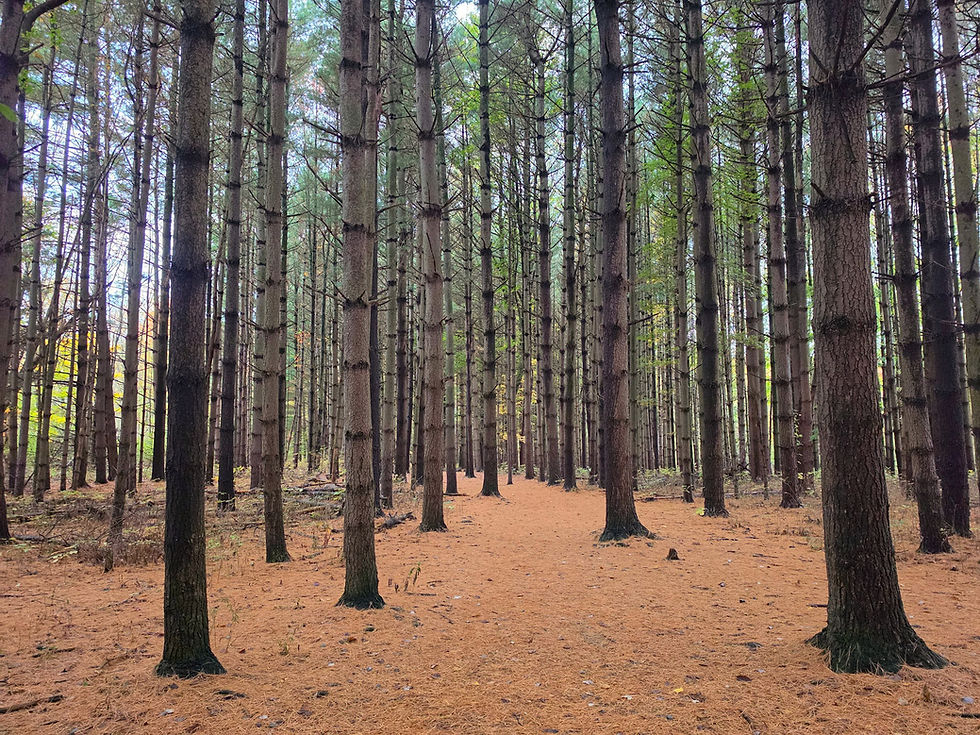
One of the most beautiful features of Pheasant Run is its impressive stand of evergreens, which creates a striking contrast with the surrounding hardwood forest. As the trail winds among the tall trees, the dense green canopy filters the sunlight, while a thick carpet of fallen needles covers portions of the forest floor.
The closely spaced trunks give this section a distinctive appearance, particularly during autumn when the surrounding deciduous trees turn brilliant shades of yellow, orange, and red. The grove is equally attractive during winter, when the evergreens retain their color and freshly fallen snow transforms the forest into a peaceful woodland scene.

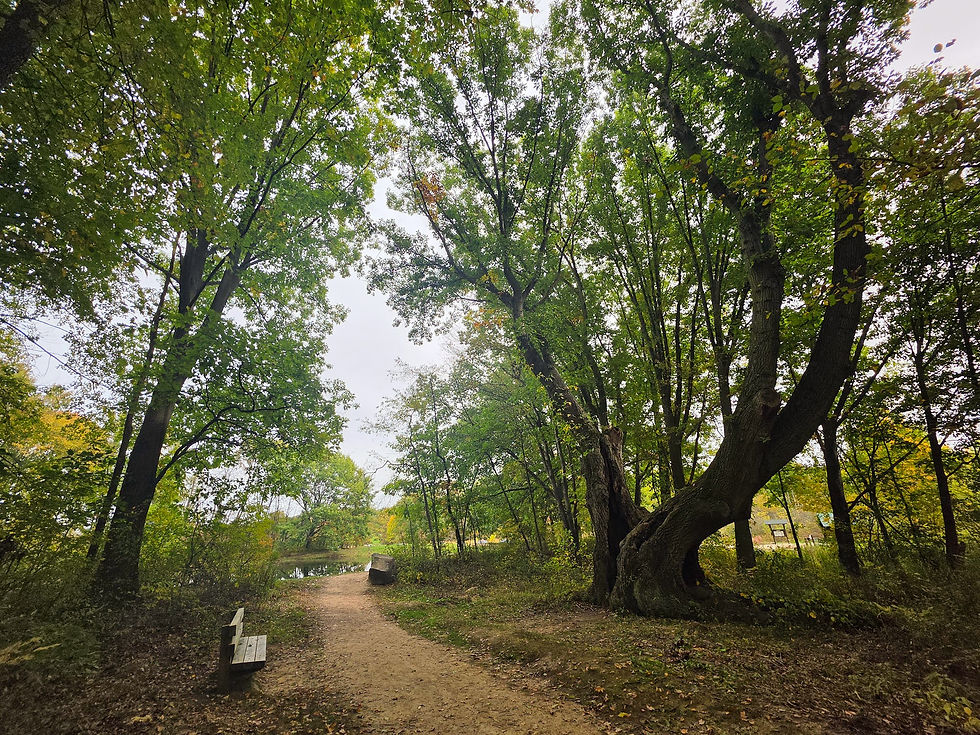
Elsewhere along the clockwise loop, Pheasant Run passes two quiet ponds that add another layer of scenery to the hike. These small bodies of water provide habitat for frogs, turtles, dragonflies, and a variety of birds, making them worthwhile places to stop and observe the surrounding wildlife. The mixture of ponds, grasslands, and woodlands also supports white-tailed deer, hawks, and numerous songbirds. During the warmer months, butterflies can be seen fluttering among the wildflowers and grasses in the park's more open areas.


Interestingly, the peaceful landscape surrounding Pheasant Run hides a much more industrial chapter of local history. Throughout much of the 19th century, coal mining was an important activity in this part of Norton, and an extensive network of abandoned mine shafts and tunnels remains beneath portions of Silver Creek Metro Park. Although there are no known accessible mine entrances along Pheasant Run, the park's mining past continues to influence its landscape. The 50-acre Silver Creek Lake, constructed during the early 1990s, receives water from a spring associated with an abandoned coal mine near Wall Road. Iron-rich drainage from historic mining operations has also left reddish-brown deposits in portions of Silver Creek, providing an unusual reminder of the area's industrial heritage.

As the loop continues through additional stretches of woodland and former fields, it eventually returns to the Pheasant Run Area parking lot, completing the easy 1.2-mile hike. Those interested in exploring more of the park's history should consider visiting the nearby Chippewa Trail, a 2.1-mile loop that passes the historic Harter Barn, old orchard remnants, and other reminders of the property's agricultural past. Together, the two trails provide a fascinating look at Silver Creek Metro Park's transformation from a landscape shaped by farming and coal mining into one of Summit County's most scenic natural areas. While Chippewa tells much of the story of the people who once worked this land, Pheasant Run showcases the forests, ponds, and wildlife that have gradually reclaimed it.



Comments