_edited.png)
Barns, Coal Mines & Forgotten Farms: Hiking the Chippewa Trail in Silver Creek

The Chippewa Trail at Silver Creek Metro Park is the kind of hike that becomes far more interesting once you know what you're looking at. The 2-mile loop in Norton passes through woods, open fields, old orchards and former farmland while showcasing a landscape shaped by agriculture, coal mining and decades of reforestation. Its centerpiece is the historic Harter Barn, a striking reminder that much of today's 1,000-acre Metro Park was once a working dairy farm.
Trail Info
Length 2.1 miles
Elevation gain 100 feet
Route Loop
Permit required No
Dogs allowed On leash
Trailhead elevation 1,008'
Water None filterable
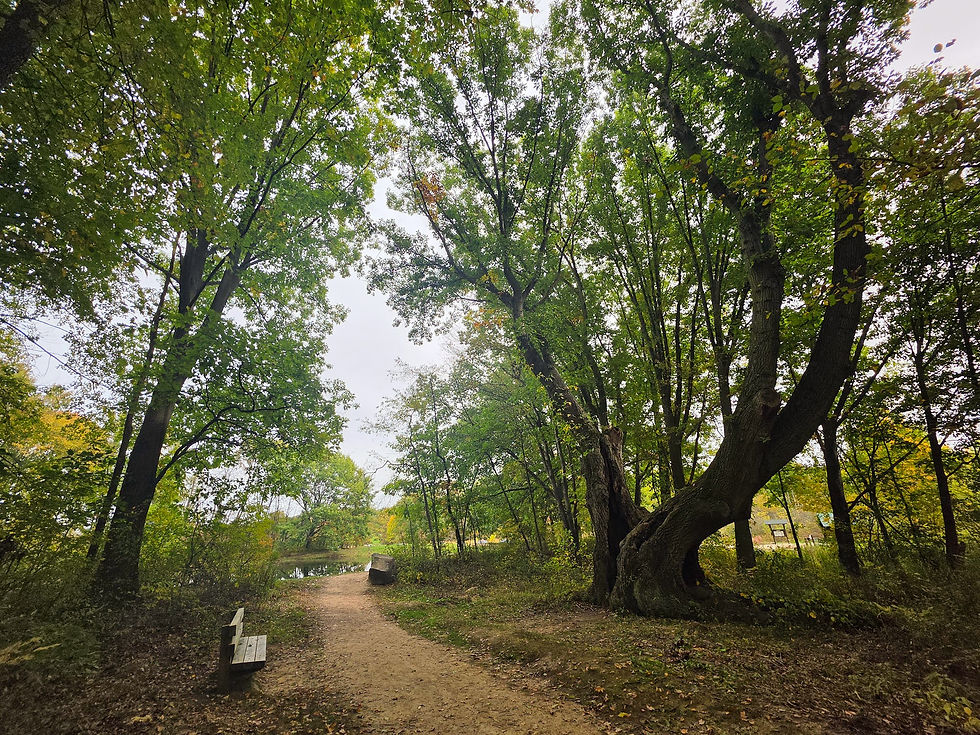
Don't miss the large oak tree at the start of the hike
Hiking the Chippewa Trail
The hike begins from the Big Oak Area along South Medina Line Road, where hikers will find parking, restrooms, picnic tables and access to the Chippewa Trail. The natural-surface trail should be considered easy, although its real appeal isn't challenging terrain or dramatic overlooks. Instead, this is a hike where seemingly ordinary features—an old tree line, an aging apple tree or a clearing in the forest—offer clues to what this property looked like generations ago.

Long before Silver Creek became a Metro Park, this corner of Summit County was an agricultural landscape. Farm fields occupied portions of the property by the Civil War era, and some of those old boundaries can still be recognized today. Narrow bands of trees along the Chippewa Trail once separated agricultural fields, while remnants of old apple orchards survive elsewhere along the route.
The most impressive reminder of that farming history is the Harter Barn.
The barn hikers see today is actually a complex of connected buildings rather than a single structure, and its oldest portions may date to the 1850s. If that estimate is correct, parts of the barn were already standing before the Civil War and long before Silver Creek Metro Park was even imagined. The park district has since restored the complex, preserving one of the most impressive pieces of agricultural history within the Summit Metro Parks system.

The Harter family's connection to dairy farming stretches back generations. The Harter Brothers Milk Company originated in the 1800s and was eventually sold to the company that became Akron Pure Milk. Fred Harter later served as sales manager there before leaving in 1934 to establish Harter Bros.–Belle Isle Farm with his brothers Bert and Harry. Much of the land surrounding today's Chippewa Trail became part of their farming operation.

The restored barn therefore isn't simply an old building that happens to sit beside the trail. The fields, fence rows and orchard remnants surrounding it were once part of its working landscape. Cattle, farm equipment and agricultural activity would have replaced the quiet woods and recreational trails visitors experience here today.

At different times, the Harter Barn has even housed antique farm implements, including equipment manufactured by Akron's Buckeye Mower & Reaper Company, once a major manufacturer of agricultural machinery. It's another subtle connection between this quiet rural corner of Summit County and the industrial history unfolding just a few miles away in Akron.
But agriculture isn't the only layer of history beneath the Chippewa Trail. Quite literally, another story lies underground. Coal mining took place on the property during the 19th century, leaving abandoned mine workings beneath portions of what is now Silver Creek Metro Park. Summit Metro Parks still interprets this history during naturalist programs on the Chippewa Trail, describing the abandoned coal mines hidden beneath hikers' feet.
The mining history even continues to influence the modern park. Silver Creek's roughly 50-acre lake, constructed along with the lake house in the early 1990s, is fed in part by a spring associated with an old mine near Wall Road. In that sense, a piece of the park's industrial past still helps shape one of its most prominent recreational features today.
The Harter farm era finally came to an end in 1966, when Bert Harter sold the property to the park district. Silver Creek Metro Park was established that year as Summit Metro Parks underwent a major period of expansion that also included the creation of F.A. Seiberling Nature Realm and Hampton Hills Metro Park.


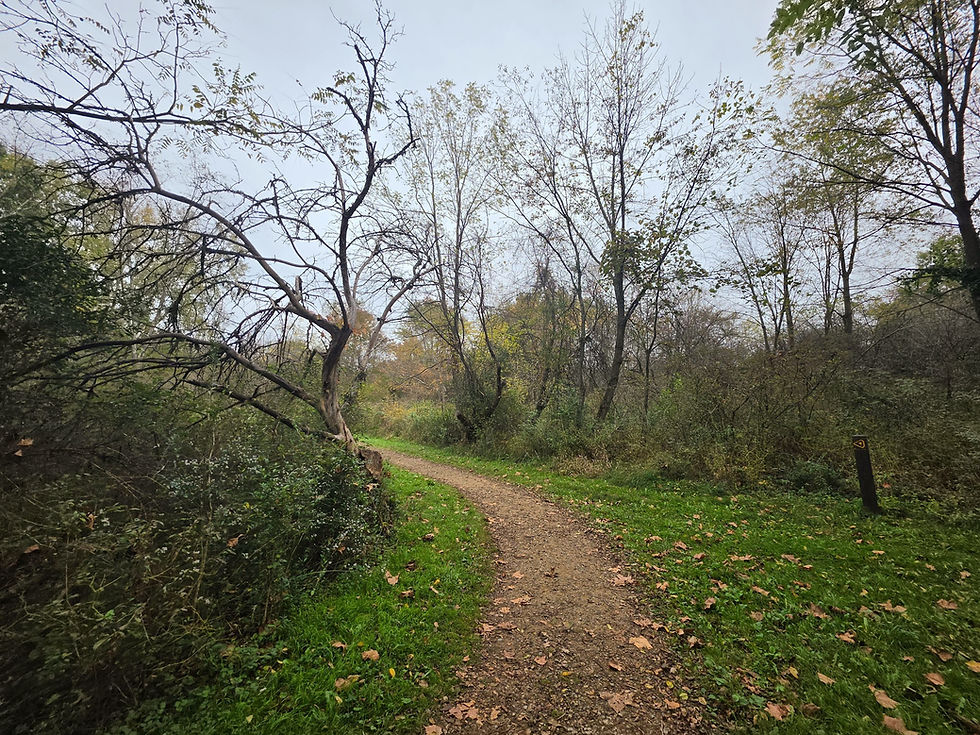
What happened next can still be seen along the Chippewa Trail. Much of the forest hikers pass through today wasn't necessarily forest when the park opened. Beginning in 1967, Girl Scout troops planted tree seedlings on the property. The planting continued through 1983, and those once-small seedlings have since matured into trees that now provide shade along portions of the Chippewa Trail.

It's one of the coolest details about this hike because it's so easy to miss. A stretch of woods that appears completely natural today may have been open farmland within the lifetime of many visitors.
Elsewhere, nature reclaimed the landscape on its own.
Old fence rows became corridors of trees and shrubs as the surrounding fields disappeared. Former agricultural ground transitioned into young forest, while old apple trees remained behind as living reminders of the property's farming days. Today, hikers move between open fields, younger woods and more mature forest, essentially witnessing different stages in the transformation of farmland back into a more natural landscape.
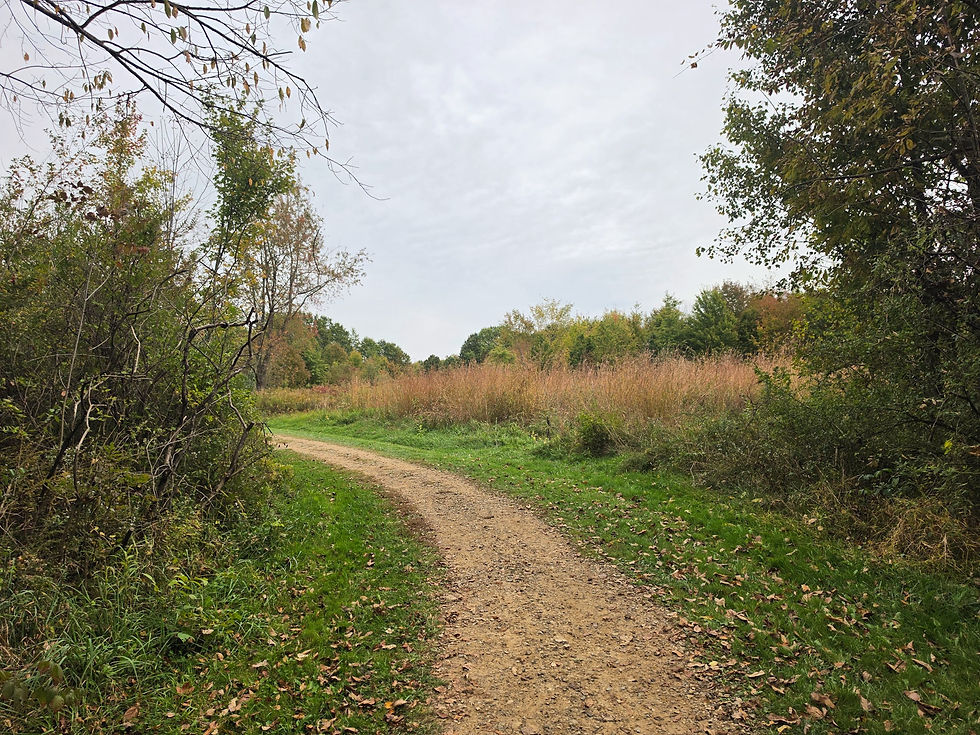
Those different habitats also make Silver Creek an excellent wildlife park. Open fields support butterflies and numerous bird species, while hawks and other birds of prey can often be spotted circling above the grasslands. Deer travel between the fields, forests and wetlands. Wetter portions of the park support tall sycamores, while hickories favor drier ground and beech-maple forest provides habitat for spring wildflowers.

Silver Creek is also home to one of the largest northern red oaks in Summit County, measuring approximately 20 feet around. The enormous tree is another reminder that while much of this landscape has changed dramatically over the past two centuries, pockets of older forest survived alongside the farms, mines and fields.
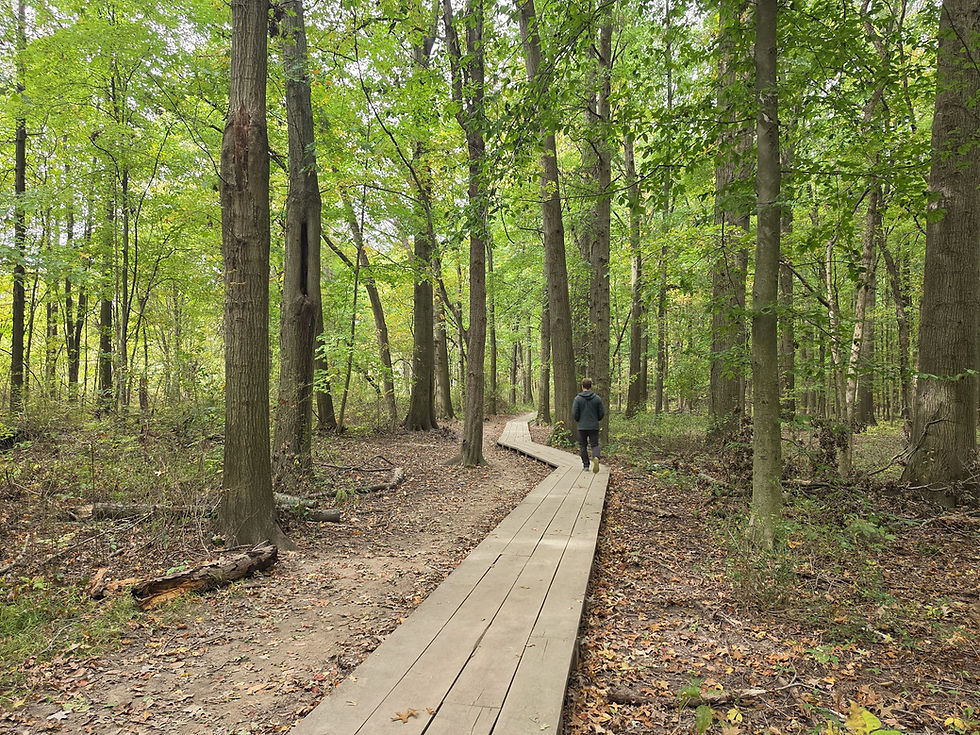
All of this makes the Chippewa Trail different from many of the better-known hikes around Northeast Ohio. There isn't a towering waterfall waiting around the next corner, nor a sandstone gorge or sweeping overlook. Instead, the attraction is the landscape itself and the stories hidden within it.

In only two miles, hikers pass through a place that has been repeatedly reinvented. Coal miners once worked beneath the ground. Farmers cleared and divided fields above them. The Harter family operated a dairy farm here, leaving behind a barn whose oldest sections may date to the 1850s. After the park district acquired the property in 1966, Girl Scouts and park workers helped return portions of those fields to forest.

Today, the woods are slowly disguising much of that history. But look closely while hiking the Chippewa Trail and the past is still everywhere—a straight line of trees where a farm fence once stood, an old apple tree left behind from an orchard, the massive Harter Barn rising beyond the fields and even abandoned coal mines hidden beneath your feet.
More than anything, the Chippewa Trail is a walk through a landscape being reclaimed by nature. What was once coal country became farmland, farmland became a dairy operation, and the dairy farm eventually became a Metro Park. Nearly 60 years after Silver Creek opened, the trees continue to grow, the old fields continue their return to forest, and the trail provides hikers with a chance to watch that transformation unfold.


Comments