
On the Lookout for Bald Eagles: Eagle Point in TInkers Creek Nature Preserve

The Eagle Point Trail in Tinkers Creek State Nature Preserve in Aurora is a short, family-friendly hike that leads to a wooden observation deck overlooking an expansive wetland known for its bald eagle sightings. Although the trail is only about 0.3 miles round-trip, it offers visitors an opportunity to explore one of Northeast Ohio's fascinating glacial landscapes while enjoying excellent birdwatching and wildlife viewing.

Trail Info
Length 0.3 miles
Elevation gain 5 feet
Route Out & back
Permit required No
Dogs allowed No
Trailhead elevation 1,000'
Water none
Don't miss hiking at sunrise
Hiking to Eagle Point
The hike begins at a small parking area along Old Mill Road, near the railroad tracks. The Eagle Point Trailhead is located on the same side of the road as the parking area, while the longer Seven Ponds Trail begins across the street. With its relatively flat terrain and short distance, Eagle Point is an excellent option for families with young children or anyone looking for a quick nature walk.
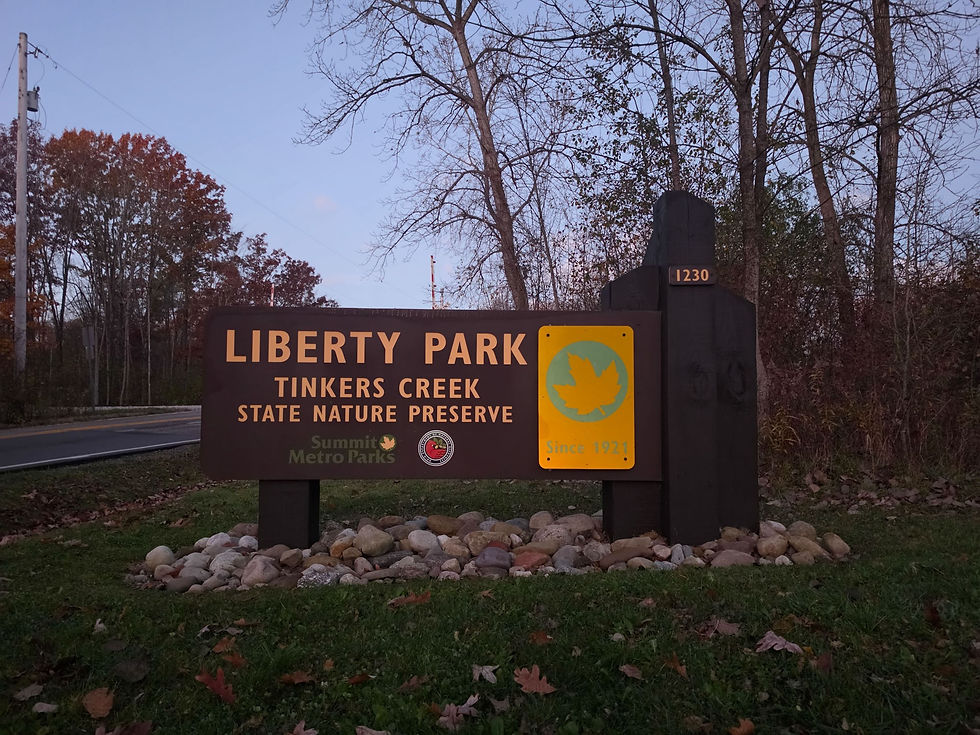
From the trailhead, the Eagle Point Trail enters a peaceful woodland filled with mature hardwoods and scattered evergreens. The path winds gently through the forest, where towering maples and oaks provide plenty of shade during the warmer months. Depending on the season, hikers may hear woodpeckers tapping on nearby trees, songbirds calling from the canopy, or frogs croaking in the surrounding wetlands.

After approximately 0.15 miles, the trail reaches its main attraction: a wooden observation deck overlooking a broad expanse of wetlands.
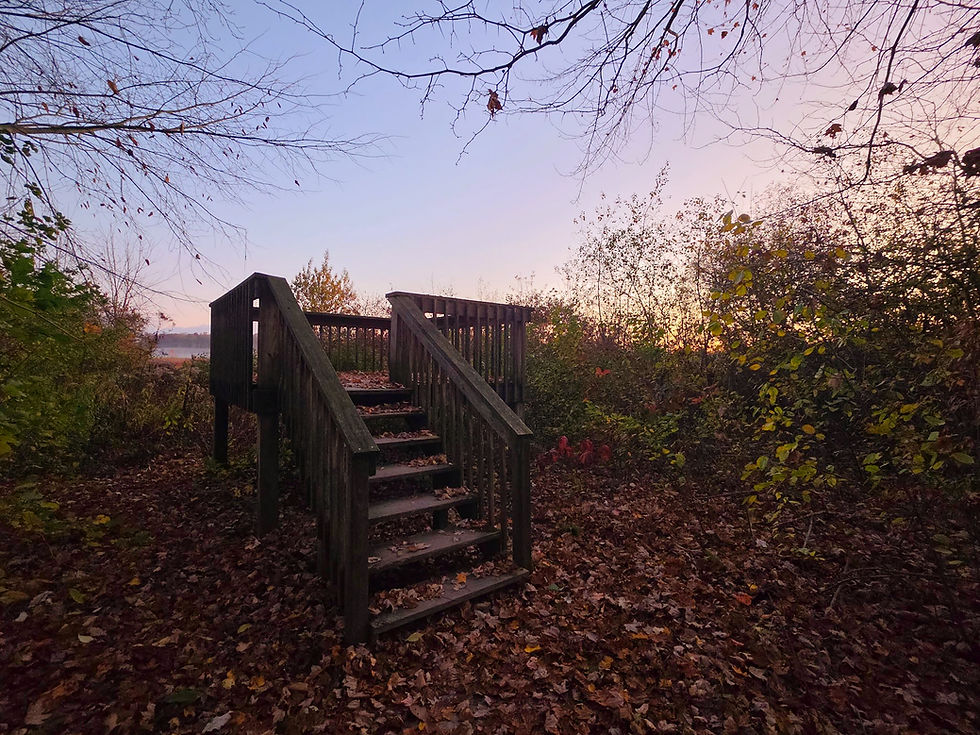
The platform provides a view of the surrounding marsh, where shallow water, wetland vegetation, and scattered trees create an ideal habitat for waterfowl and other wildlife. During spring and fall migrations, the wetlands can attract a variety of ducks, herons, and other birds, making Eagle Point a particularly rewarding destination for birdwatchers and wildlife photographers.
Perhaps the most interesting feature of Eagle Point is the history of bald eagles nesting in the surrounding wetlands. The observation platform overlooks an area where bald eagles have been documented nesting, including a large nest situated in a distant tree. The magnificent birds, once threatened by habitat destruction and the widespread use of pesticides such as DDT, have made a remarkable recovery throughout Ohio. Bald eagles often return to the same nesting territory year after year, adding new sticks and branches to their enormous nests, which can eventually grow several feet wide and weigh hundreds of pounds. Although sightings are never guaranteed, Eagle Point offers visitors a chance to observe these impressive birds in their natural habitat without disturbing their nesting grounds.

Beyond its wildlife, Eagle Point is also an interesting place to appreciate the geological history of Northeast Ohio. Tinkers Creek State Nature Preserve encompasses approximately 786 acres of forests, marshes, ponds, and wetlands shaped by the retreat of glaciers thousands of years ago. As the last continental ice sheet melted, large blocks of ice became stranded in deposits of glacial sediment. When these buried ice blocks eventually melted, they left depressions that filled with water, creating kettle lakes. Over thousands of years, some of these lakes gradually accumulated sediment and vegetation, transforming into the wetlands that characterize much of the preserve today.
After spending some time enjoying the view from the observation deck, hikers simply retrace their steps through the forest to return to the parking area. While Eagle Point is an exceptionally short hike, its combination of wildlife, glacial history, and peaceful wetland scenery makes it a worthwhile stop, especially for families with young children.

For those interested in exploring more of the preserve, the nearby Seven Ponds Trail offers a longer hike through the same glacial landscape. Unlike Eagle Point, which focuses primarily on a single wetland overlook, the Seven Ponds Trail winds through forests and past a series of ponds and marshes, providing a more immersive experience within the preserve's ancient wetlands.



Comments