
Hiking the Seven Ponds Trail: Exploring Ancient Glacial Wetlands of Tinkers Creek State Nature Preserve

Tucked away along Old Mill Road in Aurora, Ohio, Tinkers Creek State Nature Preserve protects one of Northeast Ohio's most fascinating wetland landscapes. Spanning approximately 786 acres, the preserve is home to an extensive network of ponds, marshes, peat swamps, and forests whose origins date back thousands of years to the end of the last Ice Age. Although it lacks the dramatic waterfalls and sandstone cliffs found elsewhere in the region, the preserve offers something equally remarkable: an opportunity to explore an ancient landscape that has remained relatively undisturbed despite the surrounding development.
Trail Info
Length 1.8 miles
Elevation gain 20 feet
Route Loop
Permit required No
Dogs allowed No
Trailhead elevation 1,000'
Water none
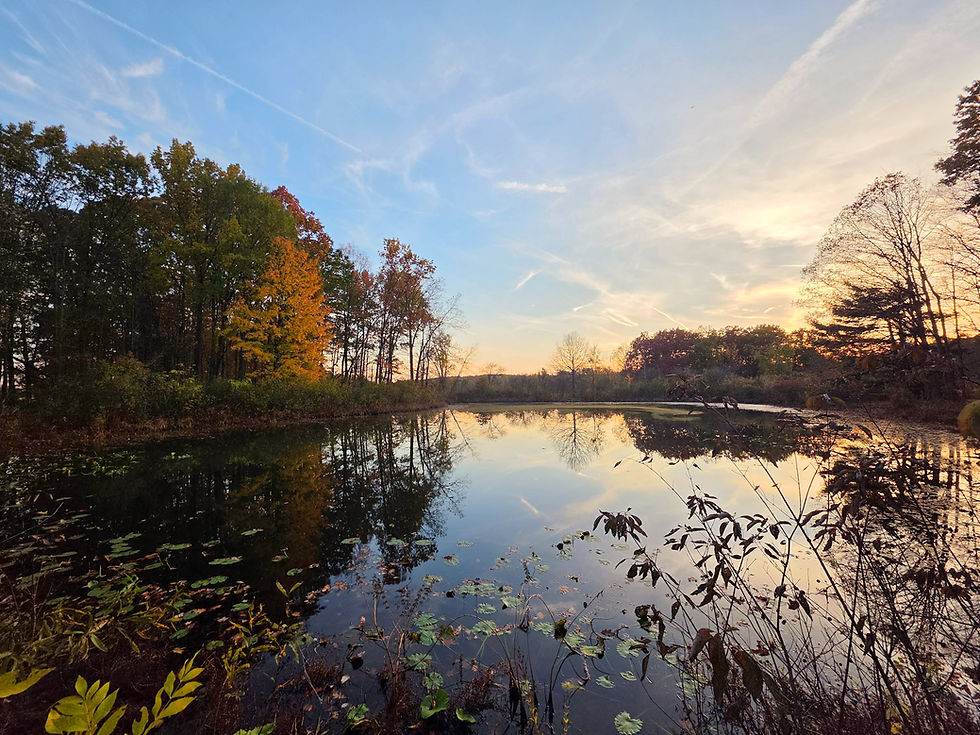
Don't miss hiking at sunrise or sunset (sunset is better)
Hiking the Seven Ponds Trail
The best way to experience this unusual environment is by hiking the Seven Ponds Trail, an easy 1.8-mile route that winds through wooded areas and wetlands, with boardwalks and observation decks providing views of the surrounding ponds and marshes. The hike begins at the preserve's parking area along Old Mill Road, where the trailhead provides access to the Seven Ponds Trail and Eagle Point Overlook Trail.

From here, the trail crosses Old Mill Road and leads into a forest setting, gradually leaving behind the sights and sounds of the surrounding community. As the trail continues, the landscape transitions between wooded sections and low-lying wetlands, offering occasional glimpses of the ponds that give the trail its name.

What makes this landscape particularly interesting is that its origins can be traced to the massive glaciers that once covered Northeast Ohio. During the last Ice Age, enormous sheets of ice reshaped the region, depositing sediment and carving out depressions as they advanced and retreated. When the glaciers began melting approximately 12,000 to 14,000 years ago, large blocks of ice sometimes became buried beneath layers of sediment. As these isolated blocks eventually melted, they left behind depressions that filled with water, creating what geologists call kettle lakes.

Over thousands of years, many of these lakes gradually evolved into the marshes and swamps visible today. Aquatic vegetation accumulated in the shallow waters, and the slow decomposition of plant material created layers of peat. The result is an ancient wetland ecosystem that continues to change, making a hike through the preserve something of a journey through the region's geological past.
One of the more surprising facts about Seven Ponds is that the ponds themselves are not all ancient glacial features. The ponds along the trail were created decades ago by duck hunters. Over time, these man-made bodies of water became valuable wildlife habitat, attracting migratory birds and providing homes for numerous wetland species. Today, the ponds blend naturally into the surrounding marshes and forests, making it difficult to imagine that human activity helped shape this portion of the preserve.

As the trail continues, the forest eventually gives way to more open wetland scenery. The ponds are surrounded by a mixture of trees, shrubs, and aquatic vegetation, creating an environment that supports an impressive variety of wildlife. Beavers and muskrats inhabit the wetlands, while wood ducks, Canada geese, and other waterfowl can often be spotted swimming across the ponds. Great blue herons occasionally patrol the shallow waters in search of fish, and the surrounding trees provide shelter for numerous songbirds.

Beavers have also played an important role in shaping the preserve's wetlands. By constructing dams along streams and drainage channels, the industrious animals create ponds that provide habitat for other species. Their activities can gradually transform sections of forest into open water and marshland, demonstrating how wildlife continues to influence the landscape long after the glaciers disappeared.


Eventually, the Seven Ponds Trail reaches an observation deck overlooking the wetlands. This is one of the highlights of the hike and an excellent place to stop for a few minutes.

Depending on the time of year, visitors may spot waterfowl, turtles, muskrats, or even signs of beaver activity. The preserve is especially rewarding during spring and fall migrations, when numerous bird species use the wetlands as a resting and feeding area.

Although the preserve's natural history is fascinating, its name also has an interesting connection to the earliest days of European-American settlement in Northeast Ohio. Tinkers Creek was named in honor of Joseph Tinker, the principal boatman who accompanied Moses Cleaveland's surveying expedition into the Connecticut Western Reserve in 1796. Cleaveland and his party were tasked with surveying the region for the Connecticut Land Company, an undertaking that ultimately led to the founding of the city of Cleveland.

Unfortunately, Tinker never lived to see the region develop. During the expedition's return journey to New England, he drowned in a boating accident on Lake Erie. His fellow expedition members later honored him by naming the creek after him, ensuring that his name would remain part of Northeast Ohio's geography for generations to come. Today, Tinkers Creek flows approximately 30 miles from its headwaters near Streetsboro to its confluence with the Cuyahoga River, making it the river's largest tributary.

Interestingly, the creek that winds through the quiet wetlands of the nature preserve eventually becomes a much more powerful waterway farther downstream. In Bedford, it plunges over the spectacular Great Falls of Tinkers Creek, where its rushing waters helped fuel the community's early industrial development. Beginning in the early 1800s, the creek provided power for sawmills, gristmills, and other manufacturing operations. Today, remnants of this industrial past can still be explored at Viaduct Park, home to the Great Falls of Tinkers Creek, where visitors can discover historic mill ruins, an old railroad viaduct, and one of the area's most impressive waterfalls. It's a remarkable contrast to the peaceful wetlands of Seven Ponds, and another reminder of how Joseph Tinker's name became intertwined with the natural and industrial history of Northeast Ohio.

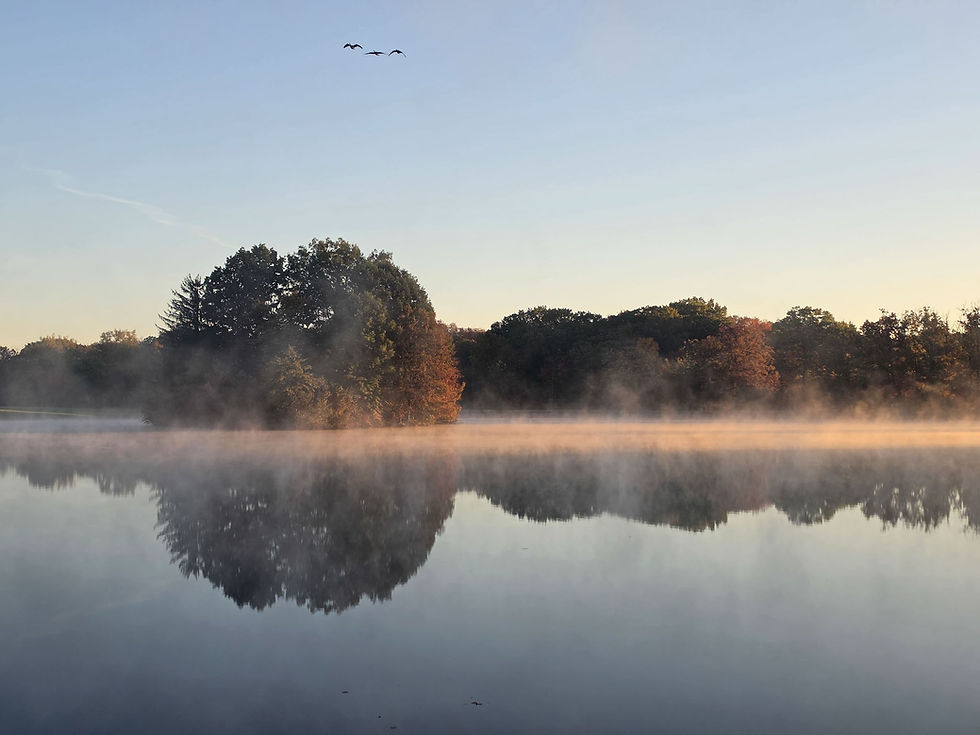
Continuing along the Seven Ponds Trail, the route winds through more wooded areas and wetlands before eventually returning toward the trailhead. Throughout the hike, the landscape alternates between relatively dry forest and low-lying marshes, offering a constantly changing perspective of the preserve. During autumn, the colorful foliage reflects beautifully in the still waters, while spring brings emerging wildflowers, migrating birds, and the sounds of amphibians calling from the wetlands.

The preserve itself has an interesting conservation history. Although the surrounding region experienced considerable development throughout the 20th century, much of the Tinkers Creek wetland complex remained relatively undisturbed. The nearby Tinkers Creek State Park was once a private recreational destination known as Colonial Spring Gardens, which featured an artificial lake and recreational facilities. Ohio purchased that property in 1966, and the state park was officially dedicated in 1973. The adjoining nature preserve was protected separately to safeguard its extensive wetlands and wildlife habitats.

In 2014, Summit Metro Parks assumed management of both properties, incorporating them into the larger Liberty Park system. Together, the former state park and nature preserve protect more than 1,100 acres of forests, marshes, and other natural habitats. The preservation of this landscape is particularly important because wetlands throughout Ohio have historically been drained for agriculture, construction, and other development.

By the time the Seven Ponds Trail returns to the Old Mill Road trailhead, hikers will have experienced a landscape shaped by thousands of years of geological change, decades of human activity, and the ongoing influence of wildlife. While its scenery may be more understated than the dramatic gorges and waterfalls found elsewhere in Northeast Ohio, Tinkers Creek State Nature Preserve offers an unusually peaceful hiking experience, along with a fascinating connection to the region's early history. For anyone who enjoys discovering the stories behind the places they explore, Seven Ponds is a reminder that even the quietest landscapes can have remarkable histories waiting to be uncovered.


Comments