
Hiking the Kerven Trail in Mentor Marsh State Nature Preserve

Located in Mentor, Ohio, the Kerven Trail at Mentor Marsh State Nature Preserve offers a scenic woodland hike through mature hardwood forests, the colorful Sonja Teraguchi Butterfly Meadow, and an old stand of towering pine trees. The peaceful hiking trail in Lake County also features an observation platform overlooking the expansive wetlands of Mentor Marsh, one of Northeast Ohio's most important wildlife habitats. With massive red oaks, seasonal wildflowers, excellent birdwatching opportunities, and fascinating natural history, the Kerven Trail offers hikers a unique way to explore the diverse landscapes surrounding Lake Erie.
Trail Info
Length 1.3 miles
Elevation gain 25 feet
Route Loop
Permit required No
Dogs allowed No
Trailhead elevation 606'
Water none
Hiking the Kerven Trail
The hike begins at the Kerven Trail parking area beside the Mentor Marsh Nature Center along Corduroy Road, a roadway whose unusual name offers an interesting glimpse into the area's early history. During the 19th century, roads crossing swampy or muddy terrain were sometimes constructed by laying logs side by side across the ground, creating a rough but passable surface for horses and wagons. Known as corduroy roads because the parallel logs resembled the ridges of corduroy fabric, the primitive roadways were particularly useful in wetland regions like the area surrounding Mentor Marsh. And while the original log road is obviously long gone, the name preserves a reminder of the challenges early settlers faced when traveling through Northeast Ohio's marshy landscape.

From the trailhead, the path immediately enters a hardwood forest. Massive red oaks are among the most impressive trees along this stretch, their enormous trunks and sprawling branches offering a glimpse of what Northeast Ohio's forests looked like long before the surrounding landscape was developed.

As the trail winds through the forest, hikers encounter a mixture of mature trees, younger vegetation, and occasional openings in the canopy. The changing landscape provides habitat for a variety of wildlife, particularly migratory songbirds that use the forests surrounding Mentor Marsh as a resting and feeding area. The preserve's proximity to Lake Erie makes it especially important during spring and fall migration, when birds traveling along the lakeshore seek shelter in the surrounding woodlands.

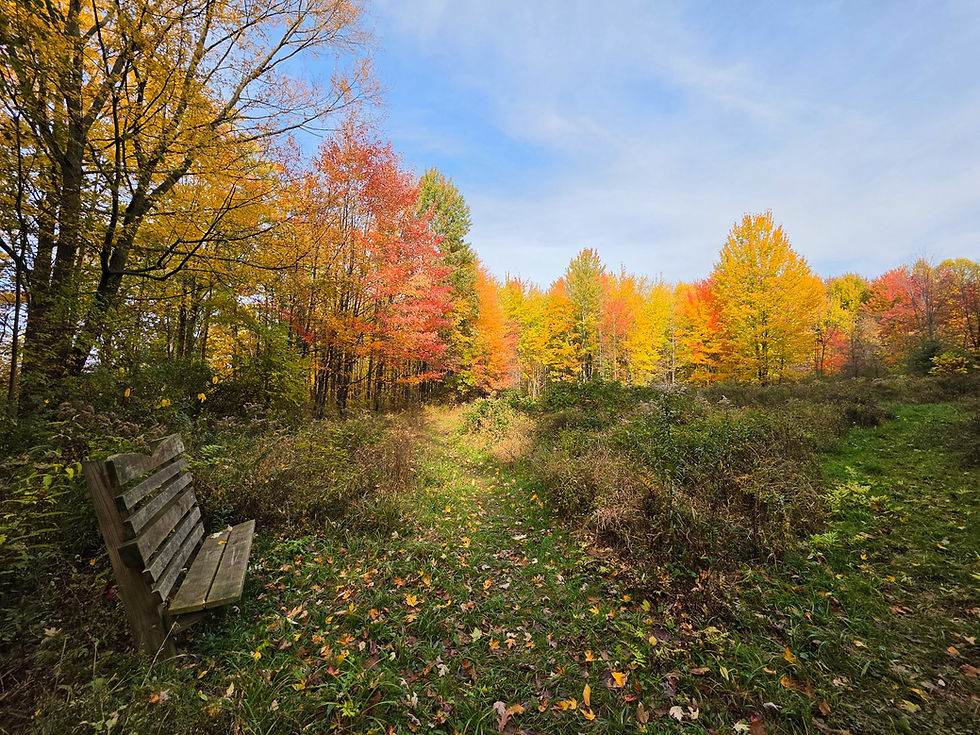
Eventually, the trail emerges from the forest into the Sonja Teraguchi Butterfly Meadow, one of the most colorful and unexpected highlights of the hike. Named in honor of Sonja Teraguchi, a Cleveland Heights resident and naturalist with an interest in butterflies and moths, the meadow provides valuable habitat for butterflies, bees, and other pollinating insects. During the warmer months, native wildflowers attract a variety of butterflies, including monarchs, swallowtails, and other species that depend on nectar-rich plants.
Beyond the butterfly meadow, the Kerven Trail continues toward an observation platform overlooking the expansive wetlands of Mentor Marsh. From the elevated vantage point, hikers can appreciate the remarkable size of the marsh, which encompasses hundreds of acres near the southern shore of Lake Erie. The overlook also provides opportunities to spot waterfowl, herons, raptors, and other birds that inhabit the wetland.

Although the observation platform offers a good view of Mentor Marsh, it doesn't quite immerse hikers in the marsh environment the way the nearby Wake Robin Trail does. While the Kerven Trail largely remains within the surrounding forest and upland habitats, the Wake Robin Trail takes visitors directly into the wetland landscape, providing a much closer look at the plants, water, and wildlife that make Mentor Marsh so unusual. For hikers interested in experiencing both sides of the preserve, the two trails complement each other particularly well.

Mentor Marsh itself has a fascinating environmental history. Once a thriving freshwater wetland, the marsh suffered extensive ecological damage during the 20th century after industrial salt waste entered its watershed. The resulting increase in salinity contributed to the decline of native vegetation and helped invasive common reed, known as Phragmites, spread across much of the marsh. In recent years, extensive restoration efforts have focused on controlling the invasive reeds and encouraging the return of native wetland plants.
Those restoration efforts have also helped improve habitat for wildlife, particularly birds. Mentor Marsh is recognized as an important stopover along the Lake Erie migratory corridor, and its combination of open wetlands, forested edges, and nearby shoreline makes it attractive to an impressive variety of species throughout the year.

After leaving the marsh overlook, the Kerven Trail returns to the woods, eventually passing through an old stand of pine trees. This section provides a noticeable change in scenery as the broad leaves and irregular branches of the hardwood forest give way to tall, straight trunks and an evergreen canopy. Fallen pine needles soften the forest floor, while the dense branches create a darker, quieter atmosphere than the surrounding deciduous woods.

Continuing beyond the pines, the trail winds through the forest before eventually returning to the parking area, completing a hike that showcases several distinctly different habitats within a relatively small area.
Although the Kerven Trail doesn't take hikers directly into the heart of Mentor Marsh, its combination of massive red oaks, the Sonja Teraguchi Butterfly Meadow, scenic marsh overlook, and mature pine forest makes it a rewarding hike in its own right. For those looking to explore more of Lake County's natural areas, nearby Mentor Lagoons Nature Preserve and the Wake Robin Trail offer great opportunities to experience the region's wetlands, forests, and Lake Erie shoreline.


Comments