_edited.png)
An Old Chimney in the Woods: Hiking to Mill Stream Run's Forgotten Sugar Shack Ruins

One of the best hikes in the Cleveland Metroparks for those who enjoy history and hidden gems can be found in Mill Stream Run Reservation in Strongsville, Ohio. The Red & Yellow Loop is a scenic woodland trail that takes hikers through dense forests and rolling terrain to the ruins of a historic maple sugar shack, where an aging chimney stands as a reminder of the area's agricultural past. Hidden among the trees, the little-known landmark offers a fascinating glimpse into a time when maple syrup production was an important part of rural life in Northeast Ohio. Combining beautiful woodland scenery, local history, and an unusual historical landmark, this Mill Stream Run Reservation hike is one of the Cleveland Metroparks' most interesting hidden gems.

Trail Info
Length 5.1 miles
Elevation gain 265 feet
Route Loop
Permit required No
Dogs allowed On leash
Trailhead elevation 823'
Water Filterable streams throughout
Don't miss hiking mid-October when falls colors are peak
Hiking Mill Stream Run's Red & Yellow Loop
The hike begins at the Royalview Trailhead, where parking can accommodate roughly a dozen vehicles.

The natural-surface trail is shared with mountain bikers and winds through a mixture of mature hardwood forests, younger woodlands, and gently rolling terrain. Although the trail features several climbs and descents, none are particularly strenuous, making it a manageable outing for most hikers.

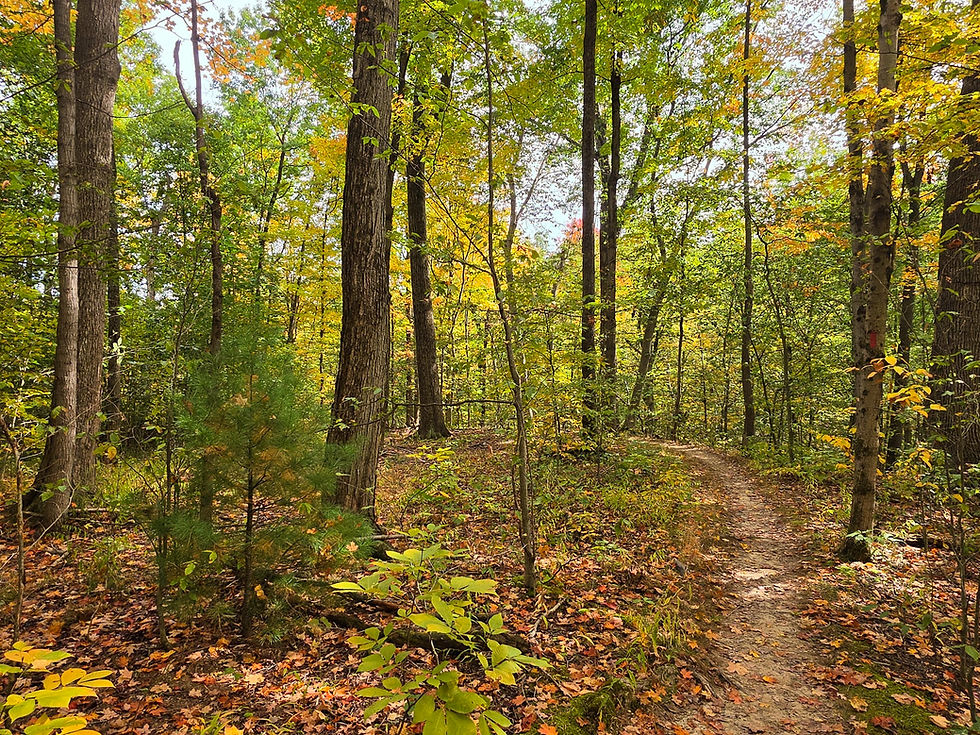
Leaving the trailhead, the Yellow Loop quickly enters a dense forest dominated by maples, oaks, and other hardwoods. The trail follows the natural contours of the landscape, weaving around hillsides and dipping into wooded ravines where small streams cut through the forest floor. Wooden bridges provide crossings over several of these waterways, adding to the scenery along the way.

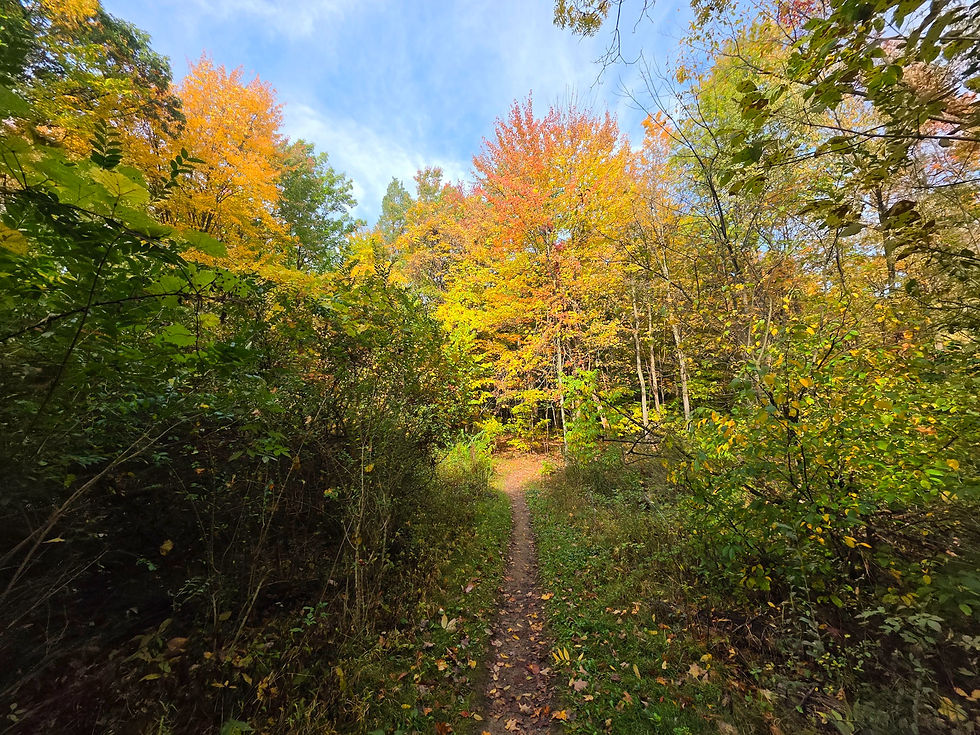
While the forest is beautiful throughout the year, autumn is an especially rewarding time to visit. The abundance of hardwood trees produces a colorful canopy of yellow, orange, and red, while fallen leaves blanket the forest floor.

As the trail continues through the woods, near the 2.8-mile mark when hiking clockwise, hikers encounter one of the most fascinating remnants of Mill Stream Run Reservation's past: an old brick chimney standing among the trees.
At first glance, the chimney might seem like an unusual sight in the middle of the forest. However, this weathered structure is one of the last visible reminders of a maple sugarhouse that once operated on the land long before it became part of Cleveland Metroparks.

Along with the chimney, remnants of the building's stone foundation can still be found nearby.

Although the original sugarhouse has disappeared, these surviving features provide a glimpse into a time when this quiet woodland was part of a productive agricultural landscape.

According to historical information attributed to the Cleveland Metroparks, the sugarhouse once produced approximately 1,200 gallons of maple syrup annually and continued operating until around 1945 before it burned down. Another smaller sugar-making operation, located roughly half a mile to the east, reportedly produced as much as 300 gallons annually until 1940.

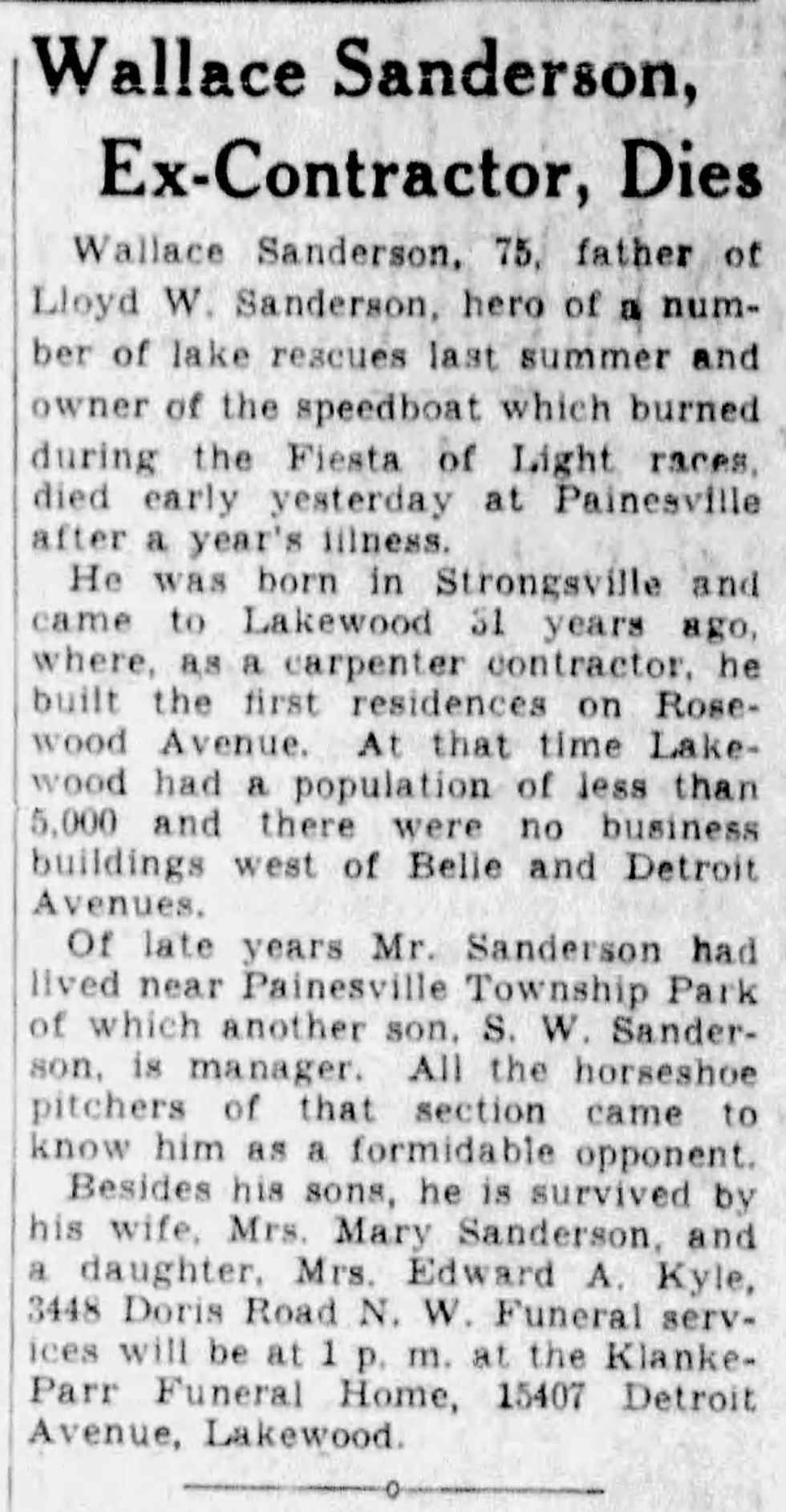
A 1908 postcard preserved by the Strongsville Historical Society offers a glimpse into what these maple sugar operations looked like. Featuring the inscription "Sugaring, Strongsville, O." and the names Lloyd, Rob, Wallace, and John, the photograph depicts one of the two maple sugar shacks that once stood within what is now Mill Stream Run Reservation. The name Wallace almost certainly refers to Wallace Sanderson, who would have been approximately 49 years old when the photograph was taken. His son, Lloyd, would have been just 14 at the time and may be the figure standing along the right side of the photograph, although it's also possible he isn't pictured. The identities of Rob and John remain a mystery.

The Sanderson family's roots in Strongsville, Ohio, date back to 1837, when Eri Sanderson and his wife, Amy Waite Sanderson, relocated from Grand Isle, Vermont, with their children following a 27-day journey west. Among them was Jeremiah Burton Sanderson, born in Vermont in 1830, who was only seven years old when the family arrived in Strongsville. The Sandersons settled in the southeastern portion of the township, where Eri established a farm and constructed a water-powered factory along a creek, using an overshot waterwheel to operate machinery.
Growing up in this environment, Jeremiah witnessed firsthand the family's involvement in Strongsville's early agricultural and industrial development. On December 31, 1855, Jeremiah married Helen Southam, and the couple had five children: Wallace, Ellsworth, Martha, J. Wesley, and Carlos. Wallace Sanderson, born around 1859, would go on to become part of the next generation of the Sanderson family farming in Strongsville. Jeremiah died in 1889 of a heart attack on his way to jury duty, but the family's connection to Strongsville continued through Wallace and his descendants.

Wallace operated a family farm in Strongsville through the turn of the 20th century, while helping oversee the maple sugaring operation. By 1910, he and his family had relocated to Lakewood, where he worked as a carpenter, contributing to the city's westward expansion. He eventually settled near Painesville, where he spent his later years before passing away on December 27, 1933. Although Wallace had long since left Strongsville, the remnants of the maple sugar operation he worked on remain a fascinating reminder of the area's agricultural past.
During the 19th and early 20th centuries, maple syrup production was an important seasonal activity for farming families throughout northeastern Ohio. Each year, as winter gradually gave way to spring, farmers took advantage of fluctuating temperatures, with warmer days and freezing nights creating ideal conditions for sap collection. Sugar maple trees were tapped, and their sap was gathered in buckets before being transported to nearby sugarhouses. There, it was boiled over wood-fired equipment for hours until much of the water evaporated, leaving behind the sweet, concentrated syrup that had become a staple of rural life.

The process required an enormous amount of sap and considerable labor. On average, producing a single gallon of maple syrup requires approximately 40 gallons of sap, depending on its sugar content. For an operation producing several hundred gallons each season, this meant collecting and boiling thousands of gallons of sap over a relatively short period.
The brick chimney would have been an important part of the operation, venting smoke and combustion gases from the wood-fired evaporator used to boil the sap.
Today, the surrounding forest has reclaimed much of the former sugarhouse site. Trees grow where workers once hauled buckets of sap, stacked firewood, and tended boiling evaporators. Without knowing the history behind the ruins, hikers could easily overlook their significance.
What makes this location particularly interesting is that the remains haven't been reconstructed into a historical attraction. Instead, the chimney and foundation have been left as reminders of the people who once worked this land, creating an unexpected connection between the present-day hiking trail and the area's rural past.
After exploring the old sugarhouse ruins, the Yellow Loop continues through the forest, following a winding route across the reservation's rolling terrain. The scenery changes throughout the hike, alternating between dense hardwood stands, younger woodland, and sections overlooking wooded ravines.

Small streams and seasonal drainage channels are common throughout this portion of Mill Stream Run Reservation, particularly following periods of heavy rain or spring snowmelt. Several wooden bridges cross these waterways, while the surrounding hillsides provide a sense of seclusion despite the park's proximity to Strongsville and the surrounding Cleveland suburbs.

Hikers looking to extend their adventure can incorporate the nearby Sugar Bush Loop, an approximately 1.2-mile hiking-only trail that connects with the Royalview trail system. Unlike the Yellow Loop, which is shared with mountain bikers, the Sugar Bush Loop is reserved for foot traffic and follows the upper edge of a wooded ravine.

As the Yellow Loop winds back toward the trailhead, hikers encounter more of the rolling terrain and mature woodland that make this section of Mill Stream Run Reservation so appealing. While there are no dramatic waterfalls or towering sandstone cliffs along the route, the changing scenery, peaceful forest, and unusual historical landmark make the hike worthwhile.
Mill Stream Run Reservation is best known for its scenic parkway, picnic areas, and popular winter toboggan chutes, but the Red & Yellow Loop reveals a quieter and more historically interesting side of the park. The combination of beautiful hardwood forests, rolling hills, wooded ravines, and an old maple sugarhouse makes this one of the more unusual hikes in the Cleveland Metroparks system.

The forgotten chimney is a reminder that many of the forests we explore today were once working landscapes shaped by generations of farmers, settlers, and small industries. What now appears to be an ordinary woodland was once a place where workers collected maple sap, hauled firewood, and spent long spring days producing syrup.
For hikers who appreciate discovering the stories behind the landscapes they explore, the Red & Yellow Loop offers a rewarding combination of natural beauty and local history, with a forgotten piece of northeastern Ohio's agricultural past hidden among the trees.


Comments