_edited.png)
Table Mountain: One of the Best Summit Views in the Columbia River Gorge

Updated: Sep 8
Hiking to Table Mountain in the Columbia River Gorge is one of the most demanding and rewarding adventures on the Washington side of the Gorge, combining relentless climbing, rugged terrain, wildflower-covered slopes, and some of the most jaw-dropping summit views in the area. Rising high above the Columbia River, Table Mountain delivers a true leg-burner of a hike, but the payoff is unforgettable: sweeping views of Mount Hood, Mount Jefferson, Mount Adams, Mount St. Helens, Mount Rainier, Bonneville Dam, and the winding Columbia River far below. For hikers looking for a challenging Columbia River Gorge hike with solid elevation gain, dramatic scenery, and a summit that feels earned every step of the way, the Table Mountain Trail is hard to beat.

Trail Info
Length 9 miles
Elevation gain 3,600 feet
Route Loop
Permit required no
Dogs allowed on leash
Trailhead elevation 92'
Water from Cedar Creek around the 2-mile mark
Don't miss the northern overlook atop Table Mountain
Hiking Table Mountain
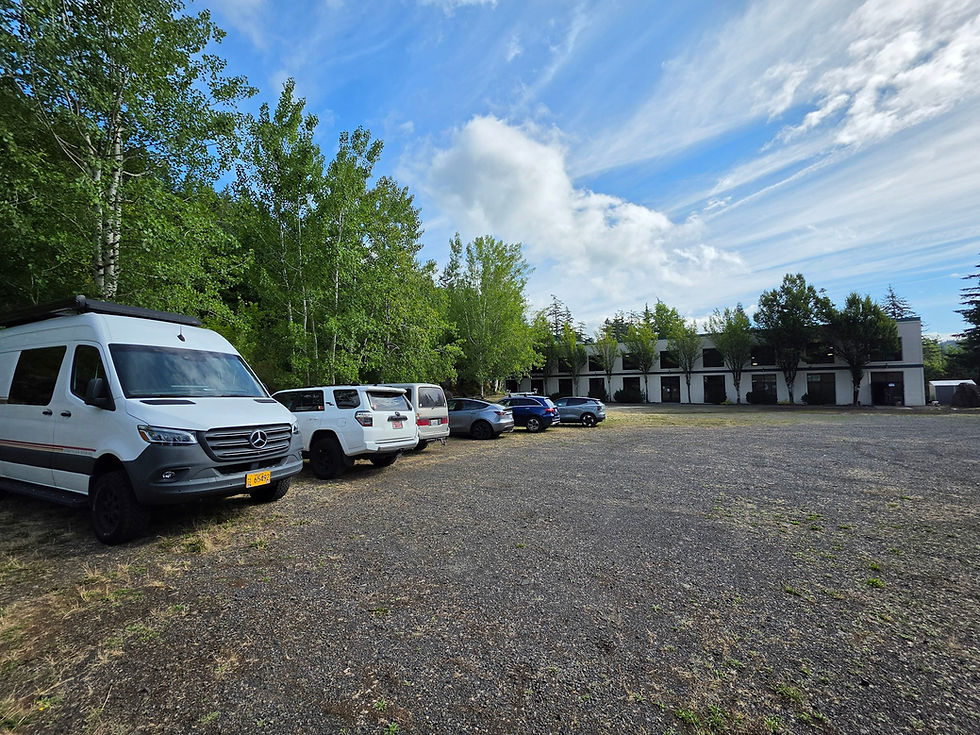
The Table Mountain hike begins behind Bonneville Hot Springs Resort, where hikers must pay a parking fee at the hotel's front desk before starting the trail. The parking area accommodates several dozen vehicles and, surprisingly, rarely fills to capacity. From the lot, the Table Mountain Trail begins a few hundred feet to the west.
After a short stretch on gravel, the trail enters a beautiful old-growth forest dominated by towering Douglas firs and western red cedars. A lush carpet of ferns blankets the forest floor, creating a classic Pacific Northwest setting. Although the trail is generally easy to follow, sections can become overgrown during the growing season, and poison oak is common along portions of the route, making long pants a wise choice.

Around the 1-mile mark, hikers reach a well-signed junction. The left fork leads toward Aldrich Butte, while continuing right begins the climb toward Table Mountain. Beyond the junction, the grade gradually steepens. Within a quarter mile, the sounds of Cedar Creek begin echoing through the forest to the west. Dense vegetation hides the creek for most of the hike, but its rushing cascades provide a peaceful soundtrack for the next three-quarters of a mile.

At approximately 2 miles, the trail briefly joins the Pacific Crest Trail before continuing toward the base of Heartbreak Ridge near mile 2.6. Here, the hike earns its reputation. Heartbreak Ridge climbs relentlessly toward the summit, gaining more than 1,800 feet in just 1.3 miles—by far the steepest section of the entire Table Mountain hike and one of the steepest stretches of trail in the entire Columbia River Gorge area.

The climb is relentless, with few opportunities to catch your breath or enjoy the scenery. One worthwhile exception comes around mile 3.1, where an unmarked, hiker-created path heads uphill to the east for roughly 100 feet to an outstanding overlook. From here, hikers are treated to panoramic views of the Columbia River Gorge, the headwall of Table Mountain, and the rugged rock formations surrounding the saddle.
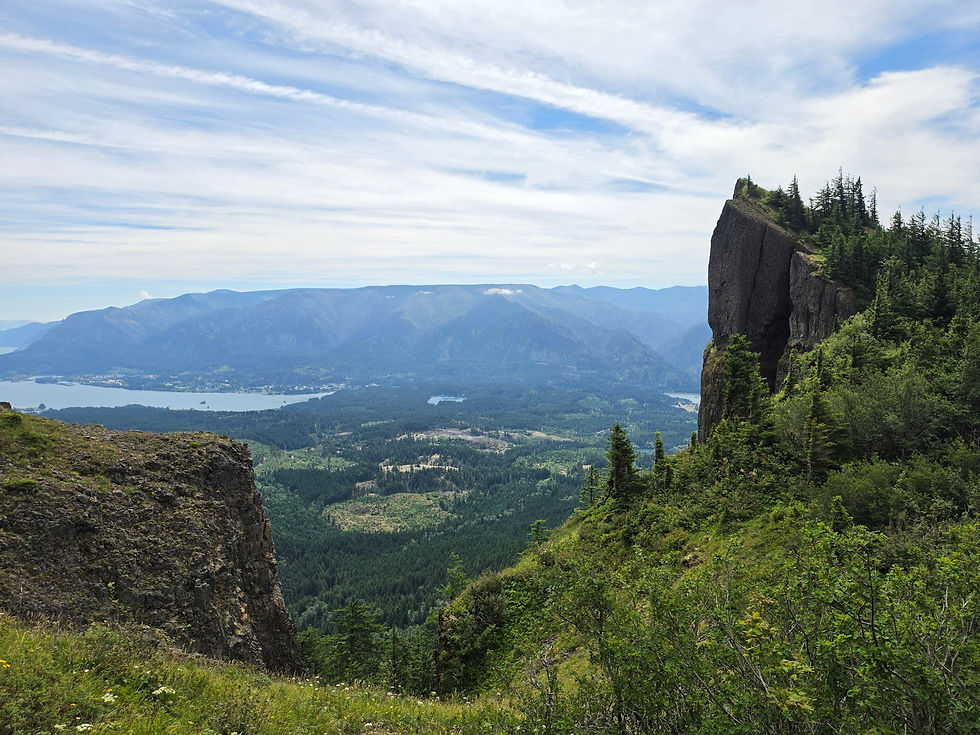
Farther up Heartbreak Ridge, the trail crosses the remnants of an ancient landslide. For roughly 200 yards, hikers scramble across hundreds of thousands of medium-sized boulders that blanket the mountainside. It's a strenuous stretch, but near the top, looking back, hikers will find an excellent west-facing view of the Columbia River Gorge and a great spot to take a break.

About half a mile later, near the 4-mile mark, the trail reaches Table Mountain's broad summit. The panoramic views immediately impress, stretching north to Mount St. Helens, Mount Adams, and Mount Rainier, while Mount Hood dominates the southern skyline and the summit of Mount Jefferson peeks above more distant ridges. As impressive as these views are, the best scenery still lies just ahead.

A narrow wildflower-filled ridge extending east leads to the dramatic edge of Table Mountain, where sheer cliffs plunge more than 800 feet into the Columbia River Gorge below.

This is one of the most spectacular viewpoints in the Gorge, offering incredible views of Mount Hood, the Columbia River, and the surrounding peaks. The path passes uncomfortably close to the cliff edge in several places, so hikers with a fear of heights should use caution.
Standing atop the headwall also offers the perfect opportunity to appreciate the remarkable geological history of Table Mountain. The dramatic 800-foot escarpment was created around A.D. 1100 during the Bonneville Landslide, one of the largest known landslides in North American history. Millions of tons of rock collapsed into the Columbia River, temporarily damming it beneath a debris pile estimated to be nearly 200 feet high. The slide created a natural land bridge that connected present-day Oregon and Washington, forever reshaping the Columbia River Gorge. Water backed up for miles before eventually overtopping the natural dam and carving a new channel through the landslide deposits.

Long before a modern bridge crossed the Columbia River, Native American tribes passed down an oral tradition explaining the creation of this natural crossing. According to the legend, the Great Spirit built a magnificent stone bridge so people could travel between both sides of the Gorge. Two powerful brothers, Wy'east (Mount Hood) and Pahto (Mount Adams), both fell in love with the beautiful maiden Loowit. Their battle shook the earth, causing the great bridge to collapse into the river. As punishment, the Great Spirit transformed the three into mountains, with Wy'east becoming Mount Hood, Pahto becoming Mount Adams, and Loowit becoming Mount St. Helens. Many geologists believe this remarkable story may preserve the cultural memory of the Bonneville Landslide, making the legend of the Bridge of the Gods one of the Pacific Northwest's most compelling examples of Native American oral history aligning with geological evidence.
After returning from the eastern viewpoint, the trail continues west across the broad, grassy summit.

Upon reaching the northern edge of Table Mountain, the trail bends southwest. Before continuing, however, hikers should consider making a short detour to the right. This overlook provides the finest unobstructed panoramic view of Mount St. Helens, Mount Adams, and Mount Rainier, making it one of the best photo opportunities along the entire hike.

Continuing southwest, the trail hugs the edge of the summit, delivering nearly continuous 180-degree views across the Columbia River Gorge as it gradually approaches the hike's notoriously steep descent.

The Table Mountain loop can be hiked in either direction, but the counterclockwise route described here is generally preferred. Hiking counterclockwise means climbing the boulder-strewn landslide before descending the mountain's loose, rocky western shoulder. Clockwise hikers tackle those challenges in reverse. Either way, the descent is demanding and hard on the knees, but the counterclockwise route rewards hikers with sweeping views of Mount Hood and the Columbia River Gorge for much of the way down, providing an unforgettable finish to the hike.

After roughly a mile of steep descending, the rocky route finally transitions back onto a traditional forest trail. The grade gradually eases as the path winds through towering evergreens before eventually returning to the trailhead.

At approximately 9 miles, the Table Mountain hike comes to an end, completing one of the most spectacular mountain hikes in the Columbia River Gorge. With its relentless climb, fascinating geology, legendary Native American history, and unforgettable views of five Cascade volcanoes, Table Mountain delivers an experience that ranks among the very best hikes in the Gorge area.




Comments